Ever heard traders talk about “Dr. Copper,” “black gold,” or the “barbarous relic” and wondered what on earth they’re on about?
Welcome to the pits! Commodities trading is where barrels, bushels, and bullion take center stage—and where headlines about supply shocks, OPEC cuts, droughts, or rate hikes can send prices ripping higher or straight into a drawdown.
In this guide, we’ll break down what commodities trading is, how it works, why prices move, and how you can start trading commodities with Phantom.
What is commodities trading?
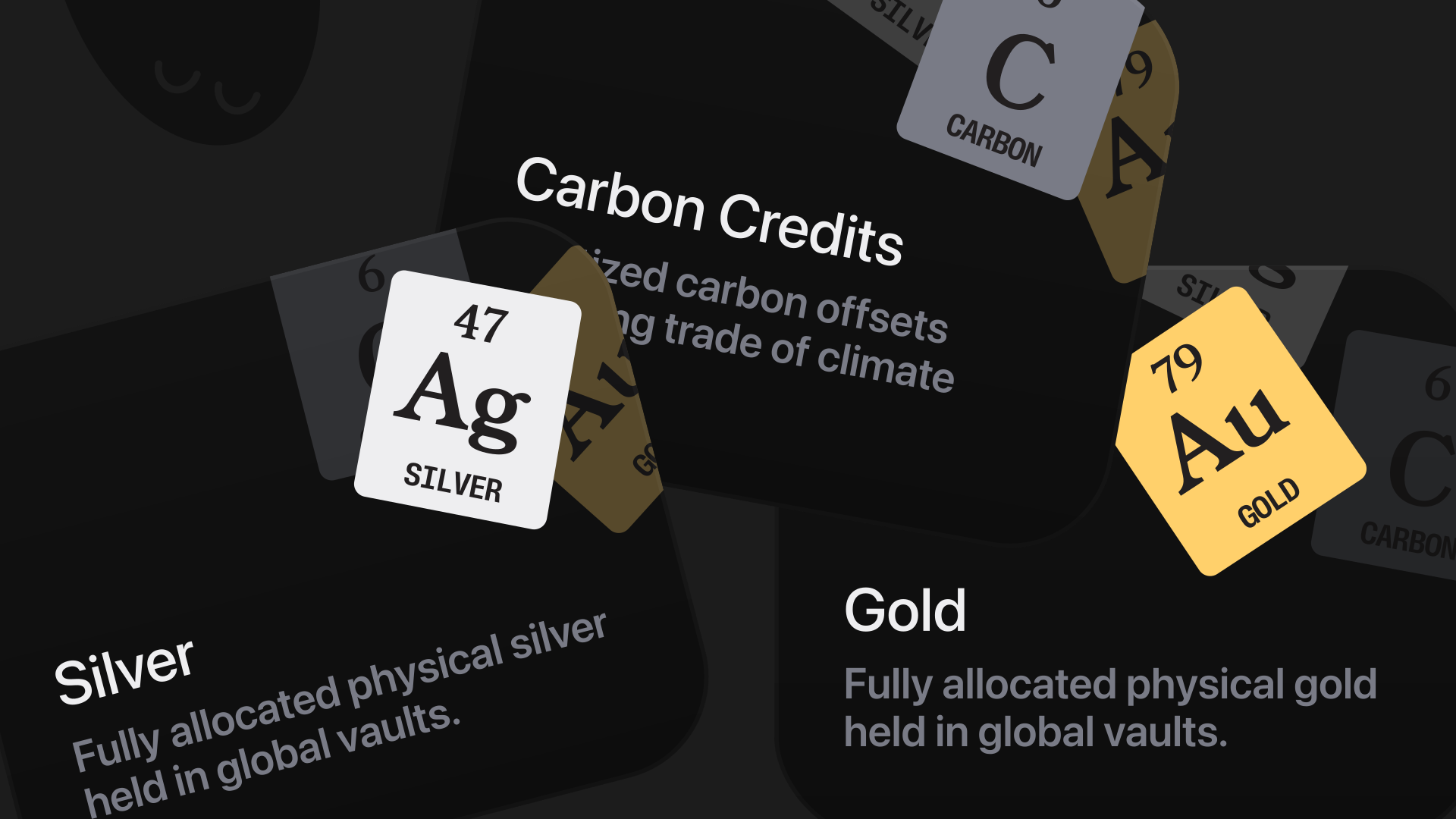
Commodities are raw materials and basic goods that include energy (WTI crude, Brent oil, natural gas, etc.), metals (gold, silver, copper, etc.), and agricultural products (wheat, coffee, corn, etc.).
In commodities trading, people trade these physical goods rather than company shares.
How commodity trading works
When you trade commodities, you usually use contracts rather than handling barrels of oil or bags of grain.
The most common way is through futures contracts. A futures contract is an agreement to buy or sell a fixed amount of a commodity at a set price on a future date. For example, if you think oil prices will rise, you could buy an oil futures contract. If oil does go up by the contract date, you can sell the contract for a profit.
Aside from futures, there are other ways to trade commodities. You can use options on futures (which give you the right, but not the obligation, to buy/sell a futures contract). Alternatively, you can buy exchange-traded funds (ETFs) or mutual funds that track commodity prices. Not only that, but you can also invest in stocks of commodity companies (like gold mining companies or oil firms) as an indirect way to play commodity prices.
Generally, the price of a commodity is driven by supply and demand and often reacts to world events. When something disrupts production or increases demand, prices can jump. For instance, bad weather might destroy a crop and push grain prices up, or a war could limit oil supply and make fuel more expensive. Markets for commodities are unique because these real-world factors (like weather, political events, or economic growth) have a big effect on prices.
Commodities are mostly traded on specialized exchanges (like the Chicago Mercantile Exchange or London Metal Exchange) using an online broker. These exchanges set standard contract sizes and rules so everyone trades the same units.
Commodities in the news
- Oil: WTI crude and Brent oil have been highly volatile, driven by ongoing supply disruptions and geopolitical tensions. Oil prices often react sharply to changes in production, transport routes, and global demand, making them a key barometer for the broader economy.
- Gold: Gold is currently in high demand. Investors often turn to gold during periods of economic uncertainty due to its historical tendency to retain value.
- Silver: Demand for silver has been increasing as well. Silver’s price swings tend to be larger than gold’s because it has many industrial uses (in electronics, solar panels, etc.) and is more sensitive to economic trends.
- Copper: Copper, too, has seen significant price movement. Copper is widely used in electrical wiring, plumbing, and especially in renewable energy systems and electric vehicles (EVs).
- Lithium: Lithium is a commodity in high demand due to its crucial role in battery production. Following a period of oversupply in 2024, prices saw a significant increase in late 2025.
- Nickel: Nickel is key for stainless steel and electric vehicle batteries. Because demand from industry and the clean energy sector has been strong, nickel prices have recently reached new levels.
Commodities trading vs. stock trading
Trading commodities is not the same as trading stocks.
When you buy a stock, you own a share of a company. When you trade a commodity, you own (or have a contract for) a raw material. For example, owning one share of a gold mining company is very different from holding a contract for gold itself. Stocks represent company value and often pay dividends. Commodities don’t produce earnings or dividends—you profit only if their prices rise.
Another big difference is the marketplace. Stocks are bought and sold on stock exchanges (like NYSE or Nasdaq), while commodities trade on commodity futures exchanges (like the CME or NYMEX). The trading methods are different too: stocks trade in shares, but commodities usually trade in standardized contract units.
Price drivers also differ. A company’s stock price moves with its profits and news about that company. A commodity’s price moves with physical supply and demand factors. For example, bad weather might send grain prices up but have little direct effect on most stocks. Because of this, commodities typically move differently from stocks. In fact, many investors add commodities to a stock portfolio to diversify risk, since commodities can act as a hedge against stock market swings.
Risks of commodities trading
Commodities trading carries high risks.
As mentioned above, the prices of raw materials can swing wildly and unexpectedly. This volatility means you could lose money just as fast as you can make it.
Another big risk is leverage. When trading futures, you often put up only a small percentage of the contract value as margin. This means gains and losses are magnified.
Other risks include lack of income and extra costs. Unlike stocks, commodities don’t pay dividends or interest—your money only grows if prices rise. If you actually buy physical commodities, you also need to store and insure them (for example, gold bars need secure vaults).
Because of these factors, you should only trade commodities if you are comfortable with the high risk and can monitor your positions. Many investors choose to educate themselves and start with smaller amounts. Always remember that commodity markets are complex and sensitive to world events. You should never invest money you can’t afford to lose.
Trading commodities with Phantom
Until recently, commodities were exclusively traded on specialized exchanges using standardized contracts and fixed unit sizes. That structure made commodities trading feel technical, complex, and unreachable for many everyday investors.
Now, Phantom lets you buy spot commodities like as XAU₮ (digital tokens backed by physical gold) directly in the app so you can hold digital exposure to these assets without dealing with complicated contract details.
You can also trade perpetual futures on WTI crude, Brent oil, gold, silver, and other commodities with Phantom. Perpetual futures let you speculate on price moves without worrying about expiration dates, giving you more flexibility and control.
If you want to get started, browse through our starter guide and our perpetual futures guide.
FAQs
Disclaimer: This content is for general educational purposes only. It is not financial advice, investment guidance, or a solicitation to buy, sell, or trade any assets, products, or services. Past performance is not indicative of future results. Any examples or strategies discussed are for illustrative purposes only and should not be considered as recommendations. You are solely responsible for your trading decisions. Phantom Perps aren’t available in all jurisdictions. Perpetual futures trading involves substantial risk of loss and is not suitable for all users. Leverage amplifies both potential gains and losses—you can lose more than your initial investment. Positions may be liquidated automatically if the market moves against you, potentially resulting in the total loss of your collateral. Equity-based perpetual contracts do not represent ownership of any underlying asset.