Ever wished your crypto could buy you a coffee without a 14-step conversion ritual?
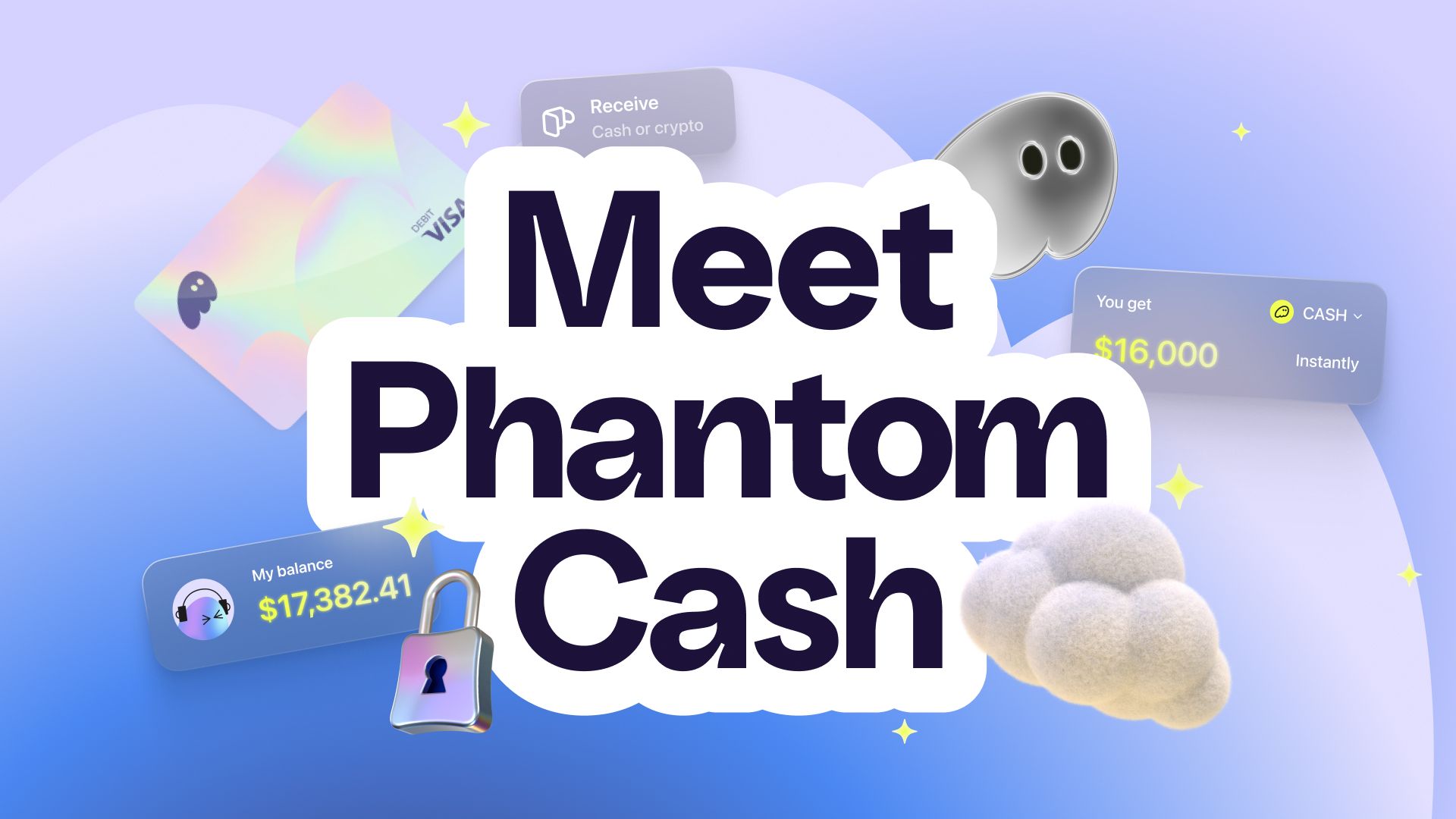
Meet Phantom Cash.
Phantom Cash includes a reloadable Visa card that lets you spend your crypto straight from your wallet anywhere Visa is accepted. No middlemen, no friction, just your crypto doing real-world stuff.
Your morning coffee, your late-night pizza, your online shopping? All fair game with Phantom Cash.
Keep reading to see how reloadable Visa cards and Phantom Cash turn your money into everyday magic.
What is a reloadable Visa card?
A reloadable Visa card is a type of prepaid debit card that you load with money and can then use for purchases, bill payments, or ATM withdrawals. It carries the Visa logo and works anywhere Visa is accepted, just like a regular bank debit or credit card.
However, unlike a traditional debit card, it isn’t linked to a bank account, and unlike a credit card, there’s no credit line—you're spending your own preloaded funds, not borrowing money.
As a result, using a reloadable Visa card won’t build your credit (since it’s not a credit account and your activity isn’t reported to credit bureaus), but it does give you a convenient, cashless way to pay if you prefer not to use a bank account or if you don’t have one.
Ways to top up a reloadable Visa card
One of the great conveniences of reloadable Visa cards is that there are multiple ways to add money to them:
- Electronic transfers: You might be able to transfer money from a bank account to your reloadable Visa card via an ACH transfer or through the provider’s website. Additionally, a few cards allow linking to PayPal or other digital wallets for transferring funds.
- Direct deposit: Reloadable Visa cards often come with an account number and routing number, allowing you to set up direct deposit. This means you can have your paycheck, government benefit payments, or other income electronically deposited straight onto your card.
- Cash reload: Many grocery stores, pharmacies, convenience stores, and other retailers partner with Visa to load prepaid cards. You simply bring your reloadable card to the store’s customer service or cashier, hand them the amount of cash you want to load, and they will add those funds to your card.
- Reload packs/codes: Certain retailers sell reload pack products that you can buy with cash or another payment method, then load onto your Visa card. You’ll typically pay at the register for the amount you would like to add, receive a code or scratch-off card, and then apply that code to your reloadable card (via phone or online) to transfer the funds.
- Bank branches: In some cases, if your reloadable Visa card is offered by a bank or in partnership with one, you may be able to reload it by walking into a bank branch. A few card programs also support reloading through certain ATMs (where you insert cash or checks).
Every reloadable card is a little different, so you should check which reload methods your card supports and what fees might apply.
Reloadable Visa card: Safety & protections
When it comes to safety and security, reloadable Visa cards offer some protections similar to traditional bank cards, but they also have a few limitations to be aware of:
- Fraud & unauthorized charges: Reloadable Visa cards do not come with the same protections like regular Visa credit/debit cards. Also note that your chargeback rights for merchant disputes may be more limited. For example, if a product you paid for with the prepaid card never arrives or a merchant refuses a refund, the process to dispute that charge isn’t as clear-cut as with regular Visa credit/debit cards. It’s wise to read your card’s terms so you know how issues are handled.
- FDIC insurance: Because a reloadable Visa card is not tied to a bank account, your funds aren’t FDIC-insured in the way your bank deposits are. In other words, the money is being held by the card issuer (or their partner bank) on your behalf, but it’s not in a personal bank account under your name. In short, reloadable Visa card balances don’t have the same safety net that a normal account deposit does. It’s a good practice not to hold very large sums of money on a prepaid card long-term, unless you’re confident about the insurance and protections in place.
Is a reloadable Visa card right for you?
Reloadable Visa cards are best for people who want the convenience of card payments without the need for a bank account or credit. They’re popular among those who are unbanked, individuals trying to control spending, or parents looking to give controlled funds to children. If you value no credit checks and no risk of debt, and you don’t mind paying a few fees for the service, a reloadable card can be a very handy financial tool. On the other hand, if you have access to a low-fee bank account or credit card, you might find the fees and limitations of prepaid cards to be less attractive.
Weigh these pros and cons against your own needs: for some, the trade-off is absolutely worth the budgeting help and simplicity, while for others a traditional banking product might be more cost-effective.
By understanding how reloadable Visa cards work and what protections they offer, you can make an informed decision about whether to keep one on your roster.
Phantom Cash: Reloadable Visa cards powered by crypto
Phantom Cash lets you use your crypto for everyday spending.
It builds on what you already do in Phantom—holding, swapping, and sending—and adds new ways to make your money work harder and faster.
Phantom Cash also gives you access to a reloadable Visa card, so you can use your Phantom balance anywhere Visa is accepted. Initially, the Visa debit card will be available as a virtual card, so you can easily add it to Apple Pay or Google Pay and use it for all your purchases.
Head over to our dedicated page to discover more about Phantom Cash.
FAQs
Disclaimer
The Prepaid Debit Visa Card (the “Card”) is issued by Lead Bank pursuant to licensing by Visa U.S.A. Inc. and may be used everywhere Visa is accepted. Must be 18 or older to apply. Fees may apply. See Cardholder Agreement and Phantom Technologies, Inc.’s (”Phantom”) website for more details.
Bridge Ventures LLC (“Bridge”) is not a bank. Bridge is a financial technology company and is the Program Manager responsible for managing and operating the Card on behalf of Lead Bank. Phantom is not a bank. Phantom is a financial technology company and is the Platform Provider responsible for the application, access, and management of/for the card.
Funds on the Card are not FDIC insured.
Nothing in this post should be construed as financial advice and is intended to be for informational purposes only.