Trading can feel complicated, but at the heart of it all are two simple tools: market orders and limit orders.
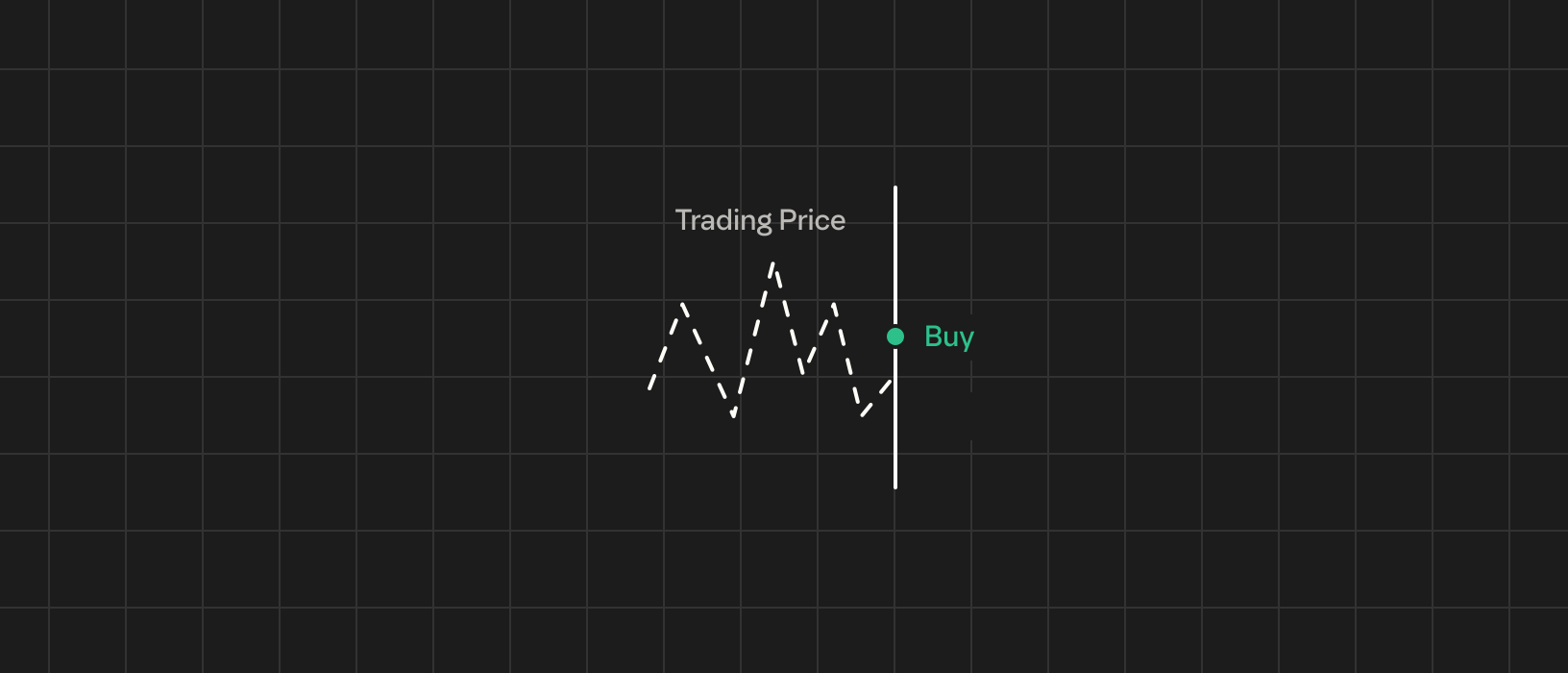
A market order is your fast-pass. It gets you in or out of a trade right away, no questions asked. Quick, clean, but sometimes a little pricey if the market is moving fast.
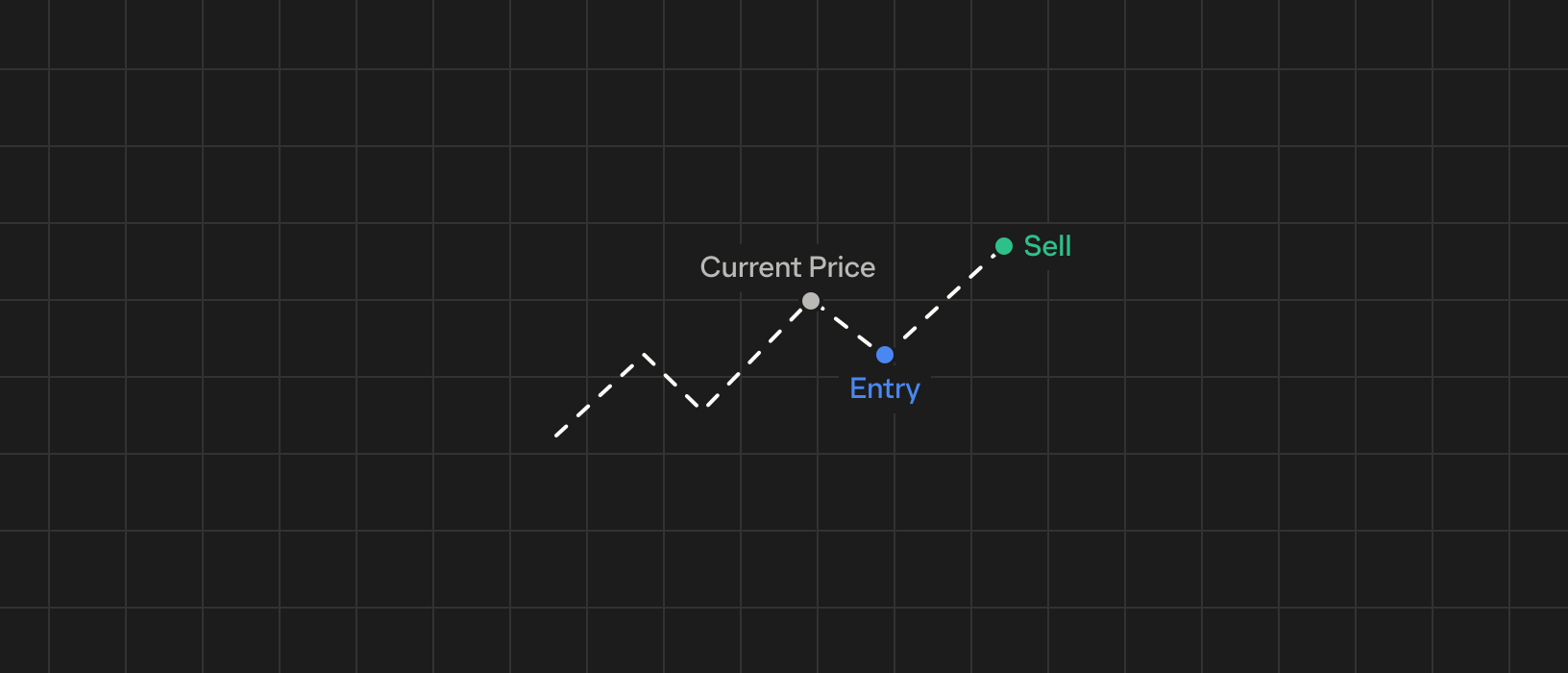
A limit order, on the other hand, lets you set your trading terms. You name the price you’re willing to accept, and the order will only go through if the market meets you there. It’s power and patience rolled into one, but it also means you could be left waiting.
A smart trader knows when it’s time to move fast and when it’s time to stay in control. So let’s break down the differences between market orders and limit orders so you know exactly which button to press next time.
What is a market order?
A market order is an instruction you give to your broker or trading platform to buy or sell an asset right away at the best available price.
- Pros of market orders: You don’t have to worry about setting a price or your order staying unfilled, your trade will generally go through right away. This makes market orders simple and useful for automating regular sells and buys (like dollar-cost averaging) because you can generally get out of and into positions easily.
- Cons of market orders: You have no control over the exact price. If the price is moving quickly, you might end up paying more (or selling for less) than you expect. This difference is called slippage. In low-liquidity conditions, an order may only partially fill or execute at a significantly different price than expected. In short, you trade speed for price control with a market order.
Learn more in our in-depth market order guide.
What is a limit order?
A limit order is an instruction that lets you choose the price at which you want to buy or sell an asset, and only executes if the market reaches that price. This gives you price control, as your order will not execute above your limit when buying, or sell below your limit when selling.
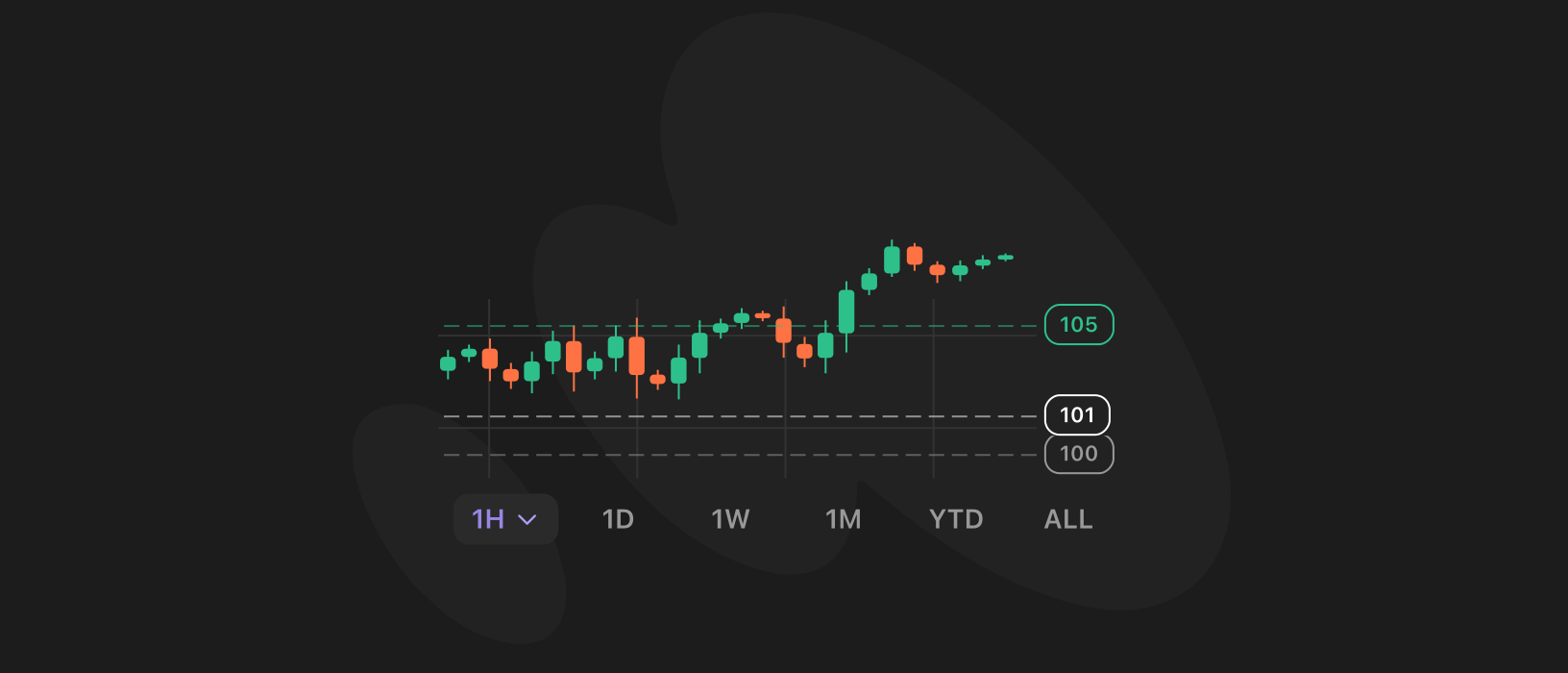
- Pros of limit orders: You get to choose your price and will not pay more or sell for less than that price. This is especially useful in volatile markets or with low-volume assets, where prices can swing a lot. You can “set it and forget it” and your order waits until your target is met, so you don’t have to watch the market constantly.
- Cons of limit orders: There’s no guarantee of execution. If the market never reaches your price, your order simply won’t fill. Limit orders may also take longer to fill, or only fill partially if not enough liquidity is available at your price. The trade-off is clear: you get more control over price, but you might not execute the trade at all.
Learn more in our in-depth limit order guide.
Key differences: Market order vs. limit order
- Speed vs. price: A market order prioritizes speed, filling as soon as possible no matter the exact price. In contrast, a limit order prioritizes price, executing only when the market price hits your specified level.
- Execution certainty: Market orders typically fill quickly in liquid markets because you agree to take whatever price is offered. Limit orders have the reverse guarantee: you’re sure of the price (or better), but not sure the trade will happen.
- Ease of setup: With a market order, you simply enter the quantity to trade, no price input is needed. This makes them easier and faster to use, especially for straightforward buys and sells. Limit orders require setting a price, which adds a bit more work.
- Expiration: Market orders typically fill immediately and then vanish from the order book; they usually don’t need an expiration. Limit orders can sit open for days or weeks (until they expire or are canceled) unless the price is hit.
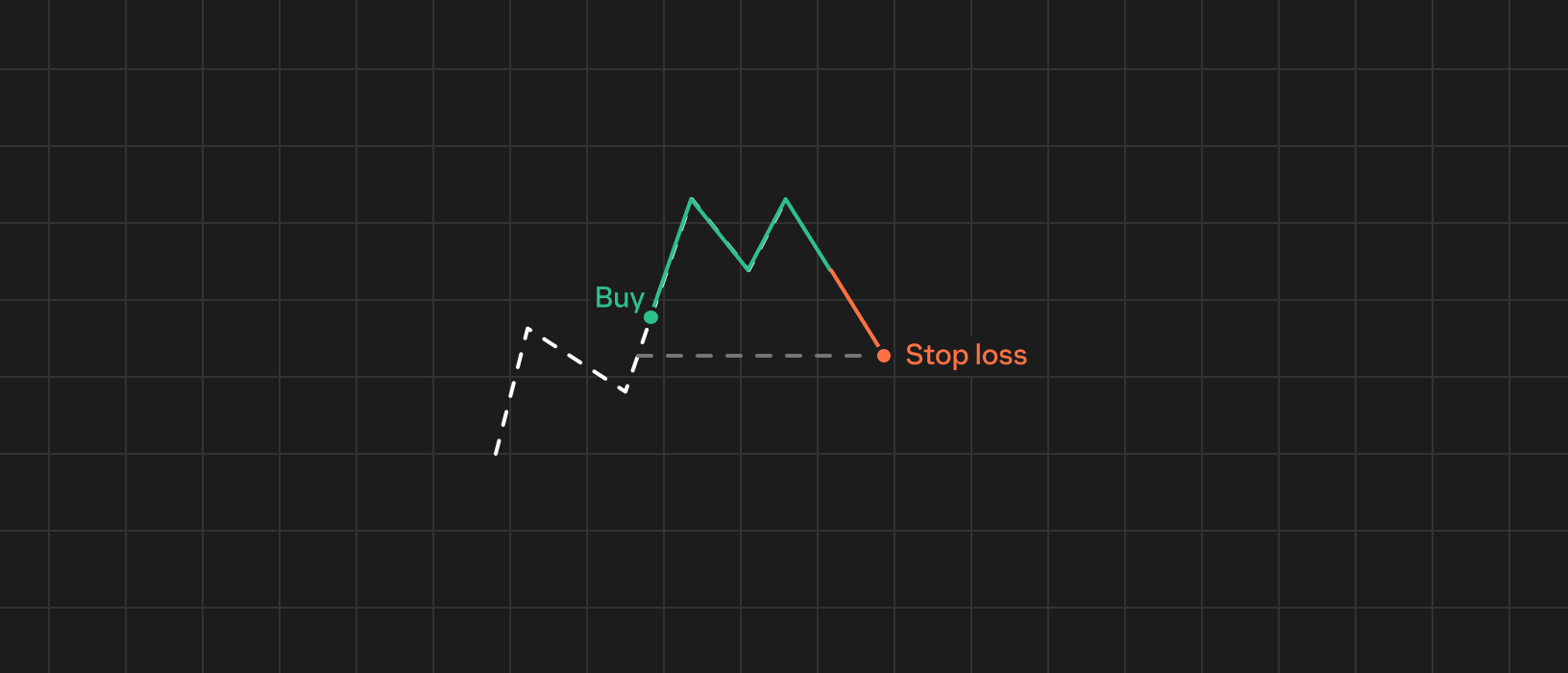
- Risk: The risk in a market order is price uncertainty, you might pay more than expected if the price jumps. The risk in a limit order is missed opportunity; if the market moves away from your price, you could miss a trade.
When to use market orders vs. limit orders
Use a market order when speed is most important. For example, if you want to buy or sell quickly and you feel the current price is fair, a market order is ideal. This is common for high-volume, liquid assets where prices aren’t jumping wildly.
Use a limit order when price control is your priority. If you want to buy only at a cheaper price than now, or sell only at a higher price than now, then a limit order is the right tool. This strategy protects you from overpaying during rapid market moves.
Always remember the trade-off between the two order types. If you absolutely must get into or out of a position, choose market order for faster execution. If you are worried about getting a bad fill or paying too much, choose a limit order for control.
Market and limit order trading with Phantom
Beyond spot trading, Phantom Perps enables eligible users in permitted jurisdictions to trade perpetual futures using various order types.
Most perps platforms today are designed for pros with complex trading features, which can be challenging and potentially dangerous for inexperienced users. But with Phantom’s intuitive, mobile-first design, you can easily open, close, and manage positions directly within your wallet. Even so, the same underlying risks apply, regardless of the fact that Phantom Perps may feel more straightforward to use.
FAQs
Disclaimer: This content is for general educational purposes only. It is not financial advice, investment guidance, or a solicitation to buy, sell, or trade any assets, products, or services. Past performance is not indicative of future results. Any examples or strategies discussed are for illustrative purposes only and should not be considered as recommendations. Perpetual futures are complex, high-risk instruments that are not suitable for all investors. Phantom Perps are not available everywhere. This guide is not intended for UK audiences.