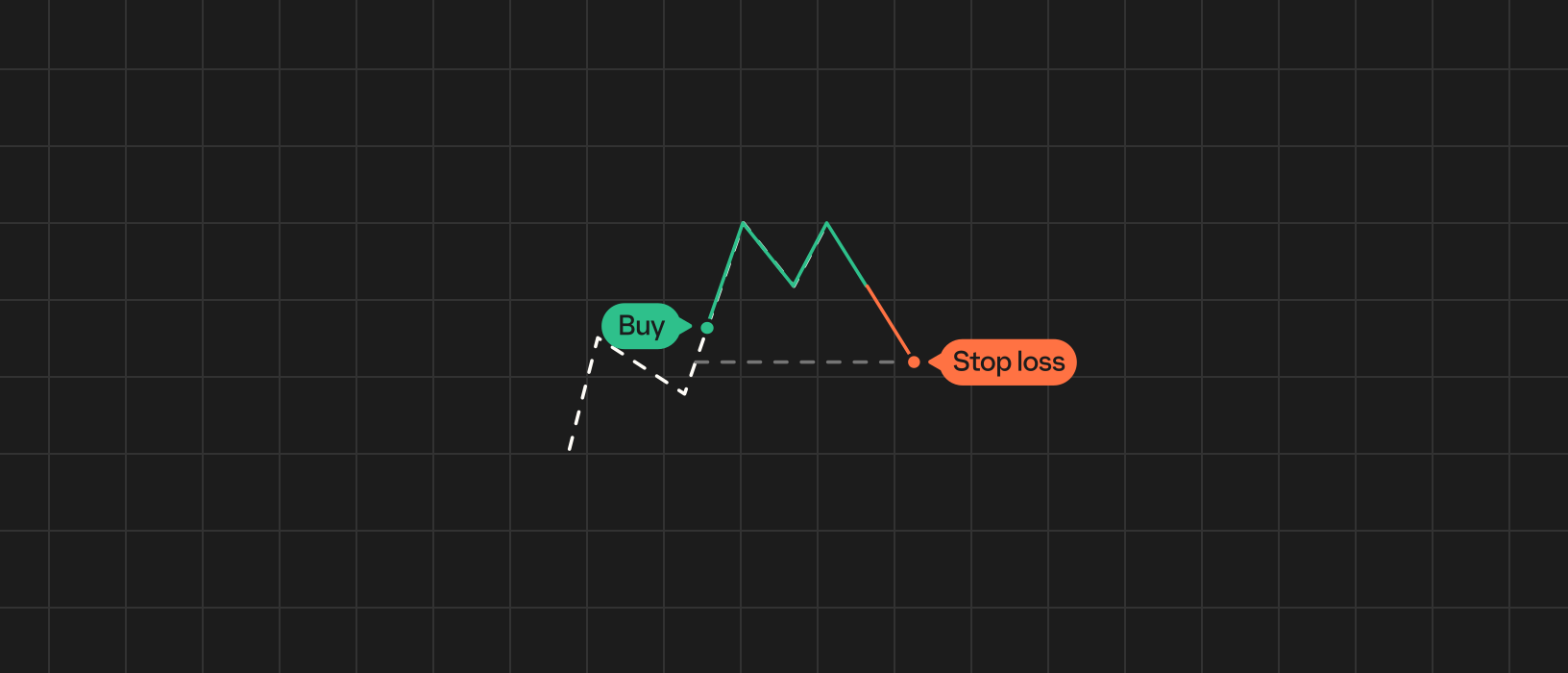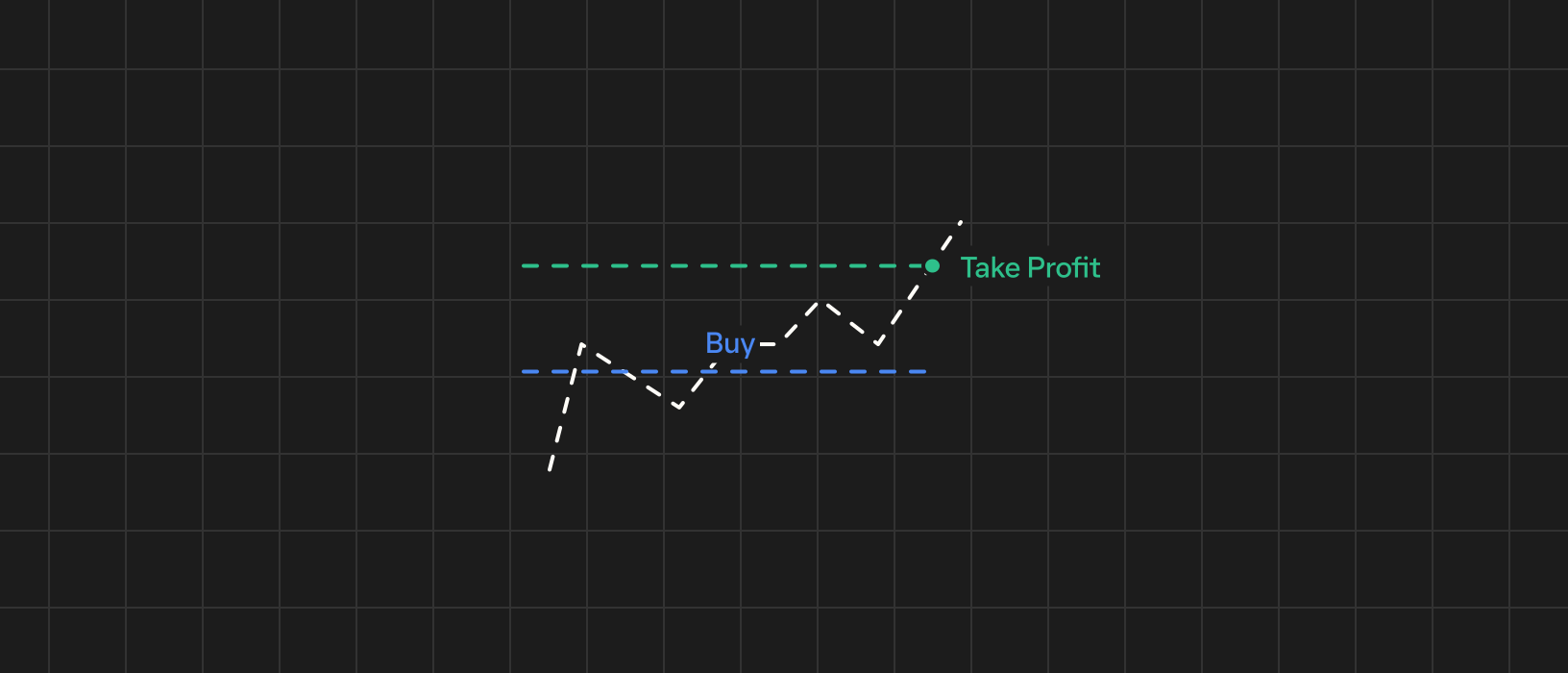
Earnings season is when the market stops guessing and companies show their cards: banks drop numbers, Big Tech flexes revenue, and stocks start swinging like it’s a volatility festival.
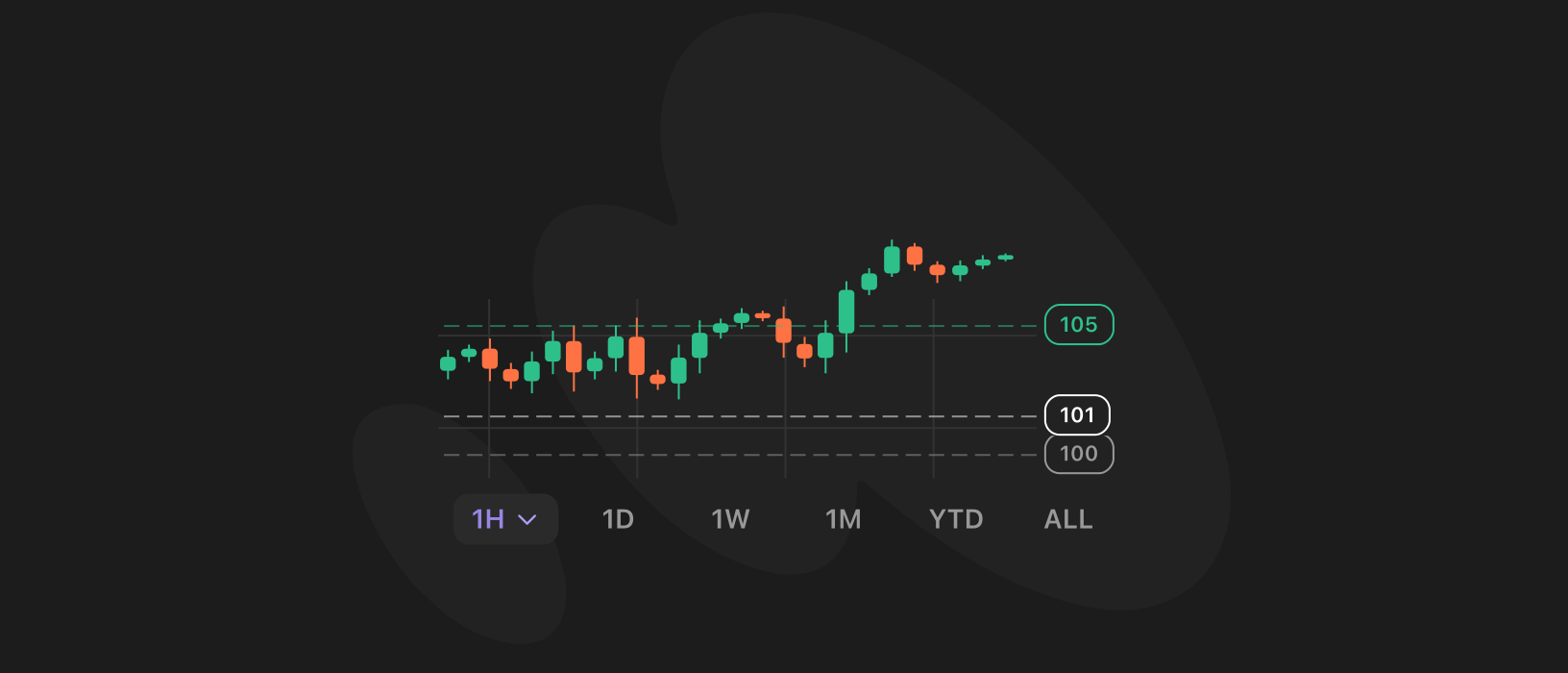
One earnings beat can send a stock ripping. One cautious outlook can wipe billions off a market cap before lunch. Translation: this period often sees increased trading activity and volatility.
In this guide, we’ll break down how earnings season works, which companies to watch, and how you can trade the market with Phantom.
What is earnings season?
Earnings season is the period each quarter when publicly traded companies release their financial results.
During an earnings season, thousands of companies report on their performance, making it the most information-rich (and often most volatile) time in the market.
Key characteristics of earnings season:
- It generally begins one to two weeks after quarter-end (for example, mid-April for Q1 results, since Q1 ends March 31). It kicks off when the first major companies (often big banks) start reporting.
- Companies usually announce an earnings release date in advance. Reports can come out before market open (BMO) or after market close (AMC), with a conference call for analysts typically the same day.
- The season “peaks” over a couple of weeks when the largest number of companies report in quick succession. For instance, late April is the peak of Q1 earnings season, when many heavyweights report results.
The typical structure of earnings season
An earnings report is the official release where a public company publishes its quarterly financial results (quarterly earnings).
The report is typically published before the market opens or after it closes, and it is the first thing traders, analysts, and financial media react to.
An earnings call comes right after the report. This is when the company’s chief executive, chief financial officer, and sometimes other executives speak to analysts and investors. They explain the numbers, talk about what drove the quarter, discuss risks and opportunities, and answer questions. For you as an investor or trader, the earnings call often matters just as much as the report itself, because management’s tone can change how the market reads the results.
When investors and traders follow quarterly earnings, they usually focus on a set of core KPIs:
- Earnings per share (EPS): This is one of the most watched headline numbers. It shows how much profit the company earned for each share, and the market usually compares it with analyst estimates.
- Revenue: Revenue tells you how much money the company brought in during the quarter. Even if profit is strong, weak revenue can signal slowing demand.
- Operating margin: This tells you how efficiently the company turns revenue into operating profit. Rising margins can indicate effective cost control or pricing power.
- Net income: Net income is the company’s profit after costs, interest, and taxes. It gives you a bottom-line view of how much money the business actually kept.
- Forward guidance: Guidance is management’s forecast for the next quarter or full year. This can be even more important than the quarter that just ended, because stocks trade on future expectations.
- Outlook drivers & commentary: This includes things like customer demand, pricing, costs, hiring, AI spending, advertising trends, loan losses, or consumer behavior. These details often explain where the business is heading next.
Why are quarterly earnings important for markets?
Quarterly earnings can be a significant catalyst in financial markets, here’s why:
- Market impact: Quarterly earnings are one of the biggest drivers of stock prices and even entire indices. When a company reports earnings, it often triggers an immediate reassessment of its value. If results and outlook are strong, the stock can pop; if they disappoint, it can drop dramatically. This effect is magnified for large companies. For instance, when mega-cap tech companies like Apple or Microsoft report results, they often move the entire market. In fact, during earnings season it’s common for major indices (S&P 500, Nasdaq, etc.) to swing up or down in response to surprises from the biggest components.
- Volatility: Earnings season is also when market volatility spikes. With so much information coming out, traders are adjusting positions rapidly. Historically, the period is more volatile than when earnings are sparse. Portfolios can be made or broken in a single earnings season. It’s not unusual to see individual stocks move 10-20% in a single day after an earnings announcement if results are far above or below expectations. For example, in past earnings season, Meta’s stock jumped +10% in one day after an earnings beat, while Microsoft fell about -10% on its earnings due to some worries. These are big swings for trillion-dollar companies, underlining how crucial earnings news can be.
- Guidance & sentiment: In earnings season, companies often provide guidance as well (see above). This guidance can have an even bigger effect on market sentiment. If many companies warn of a slowdown ahead, it can spook investors about the economy overall. Conversely, upbeat guidance can lift optimism. During earnings season, investors also parse comments for broader economic signals. For example, banks’ earnings can reveal the health of credit and consumer spending, while consumer goods companies tell us about consumer demand. In this way, earnings season serves as a quarterly checkup on the economy’s pulse, sector by sector.
Additionally, investors and traders also pay attention to subtle signals and other key details:
- Earnings surprises: Market participants closely watch whether companies beat, meet, or miss analyst expectations. When earnings or revenue come in above forecasts, stocks often rally as markets reprice growth prospects, while disappointing results can trigger sharp sell-offs.
- Bellwether performance: Capital allocators pay special attention to large, influential companies whose results often signal the health of an entire sector or the broader economy. Strong results from bellwethers can lift sentiment across related stocks, while weak numbers may raise concerns about slowing demand or tighter margins.
- Overall earnings performance: Beyond individual companies, market participants also assess the overall strength of earnings season across the market. Strong aggregate results tend to support equity markets, while widespread misses and weaker guidance can pressure indices and increase volatility.
Earnings season 2026: Q1
Now let’s dive into the specific lineup for the Q1 2026 earnings season.
Week of Apr 13
- JPMorgan Chase (JPM) — April 14
- Johnson & Johnson (JNJ) — April 14
- Taiwan Semiconductor Manufacturing Company (TSM) — April 16
- Netflix (NFLX) — April 16
- PepsiCo (PEP) — April 16
- Abbott (ABT) — April 16
Week of Apr 20
- UnitedHealth (UNH) — April 21
- Tesla (TSLA) — April 22
- SK Hynix Inc. (SKHX) — April 22
- Intel (INTC) — April 23
- Procter & Gamble (PG) — April 24
Week of Apr 27
- Visa (V) — April 28
- Coca-Cola (KO) — April 28
- Robinhood (HOOD) — April 28
- AstraZeneca (AZN) — April 28
- Alphabet (GOOGL) — April 29
- Microsoft (MSFT) — April 29
- Meta (META) — April 29
- Amazon (AMZN) — April 29
- Samsung (SMSN) — April 29
- Apple (AAPL) — April 30
- Mastercard (MA) — April 30
- Merck (MRK) — April 30
- Eli Lilly (LLY) — April 30
- Rivian Automotive (RIVN) — April 30
- Sandisk Corporation (SNDK) — April 30
- Berkshire Hathaway (BRK.A/K) — May 01
- Chevron (CVX) — May 01
- Linde (LIN) — May 01
Week of May 4
- Palantir (PLTR) — May 04
- Advanced Micro Devices (AMD) — May 05
- Pfizer (PFE) — May 05
- Strategy (MSTR) — May 05
- Novo Nordisk (NVO) — May 06
- McDonalds (MCD) — May 07
- Coinbase (COIN) — May 07
- DraftKings (DKNG) — May 07
- CoreWeave (CRWV) — May 07
Week of May 11
- Hims & Hers (HIMS) — May 11
- Circle (CRCL) — May 11
- Alibaba (BABA) — May 13
Earnings Season May 20 - May 29
- Nvidia (NVDA) — May 20
- Walmart (WMT) — May 21
- Costco (COST) — May 28
Trade earnings season with Phantom
Phantom offers two ways you can trade earnings season: tokenized stocks/indices and perpetual futures for individual stocks/ETFs.
With tokenized stocks and indices (this relates specifically to Backed assets), you get 24/7 access to the spot market around earnings releases. You can build positions before results come out, react immediately to the news, or accumulate assets after volatility settles. Some traders use tokenized stocks and indices for short-term momentum trades, while others use them to gradually build a long-term portfolio during periods of market movement.
A selection of tokenized stocks and indices available on Phantom:
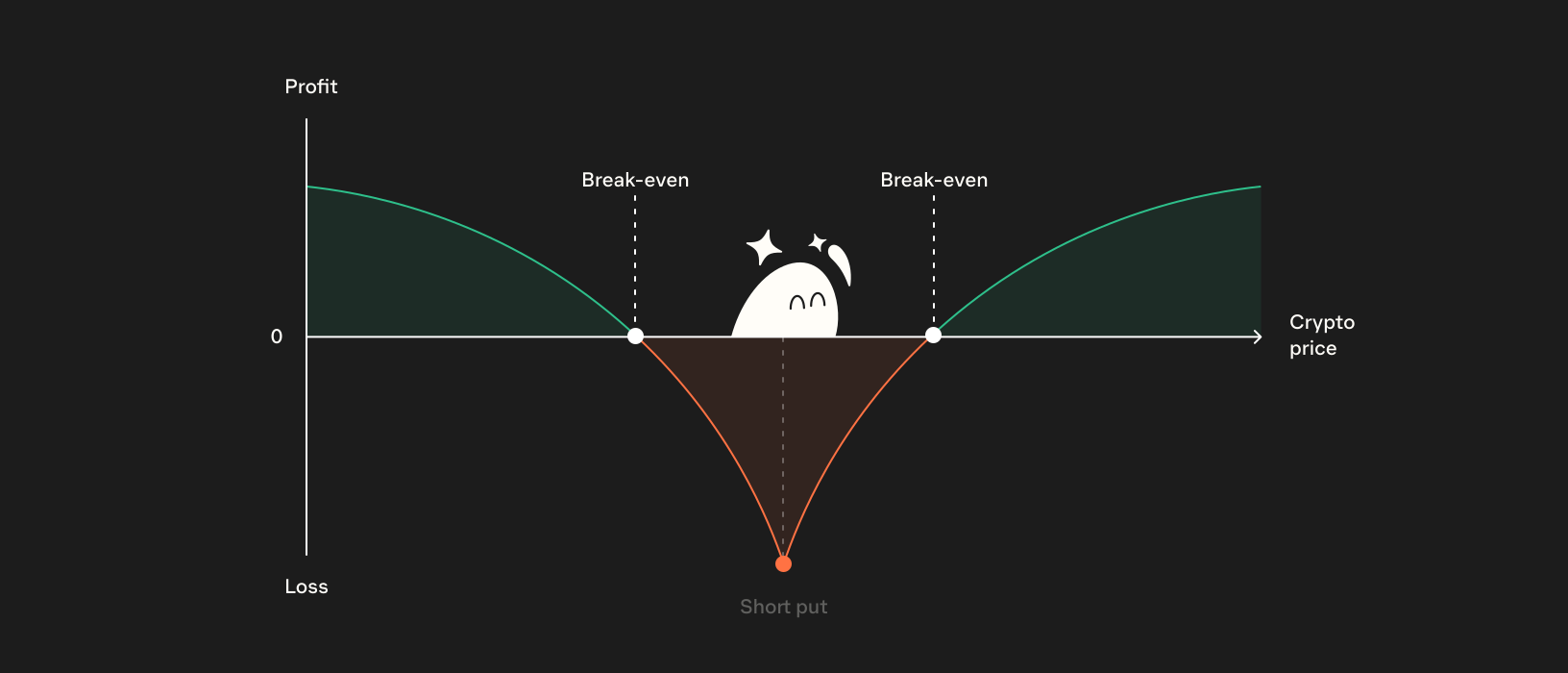
With perpetual futures, you can capitalize on large short-term stock price moves in either direction. You can take a long position if you expect a company or sector to beat expectations, or a short position if you believe the results may disappoint. Perpetual futures on individual stocks and ETFs can also be used to hedge existing spot positions (tokenized stocks/indices) during the volatility that often surrounds earnings announcements. For example, if you hold several tech stocks, shorting QQQ can help hedge against a broader decline across the technology sector.
Here are some perpetual futures for individual stocks and ETFs you can trade on Phantom:
- Taiwan Semiconductor Manufacturing Company
- Meta
- Tesla
- Coinbase
- Robinhood
- XYZ 100
- SP500
- EWY (iShares MSCI South Korea ETF)
- EWJ (iShares MSCI Japan ETF)
If you’d like a more in-depth overview, take a look at our perpetual futures guide.
FAQs
Disclaimer: Tokenized stocks aren't actual stocks. They are blockchain-based instruments issued by third parties that provide exposure to the performance of the underlying equities. While they track price movements and mechanics of the underlying securities, they don't confer ownership rights or shareholder benefits. They are available in select jurisdictions only. To enable a user to gain exposure to US equities, Phantom has partnerships with third-party issuers of tokenized stocks. Phantom supports access to tokenized stocks through third-party issuers. Phantom only provides the platform for you to view, buy, and sell these tokens. Each tokenized stock is governed solely by the terms set by its issuer. Phantom has no control over those terms and doesn’t guarantee any rights, returns, or liquidity. Trading tokenized stocks involves risk, including the potential loss of principal, and may not be suitable for all users. The value of tokenized stocks may fluctuate significantly, may not reflect the per share price of the underlying equity, and past performance isn't indicative of future results. Phantom Perps aren’t available in all jurisdictions. Perpetual futures trading involves substantial risk of loss and is not suitable for all users. Leverage amplifies both potential gains and losses—you can lose more than your initial investment. Positions may be liquidated automatically if the market moves against you, potentially resulting in the total loss of your collateral. Equity-based perpetual contracts do not represent ownership of any underlying asset. This information is for educational purposes only and does not constitute financial advice. You are solely responsible for your trading decisions.